Does Coffee Count Toward Your Daily Water?
Many of us wonder whether the morning cup counts as hydration or works against it. Here's a plain look at how drinks fit into your day.
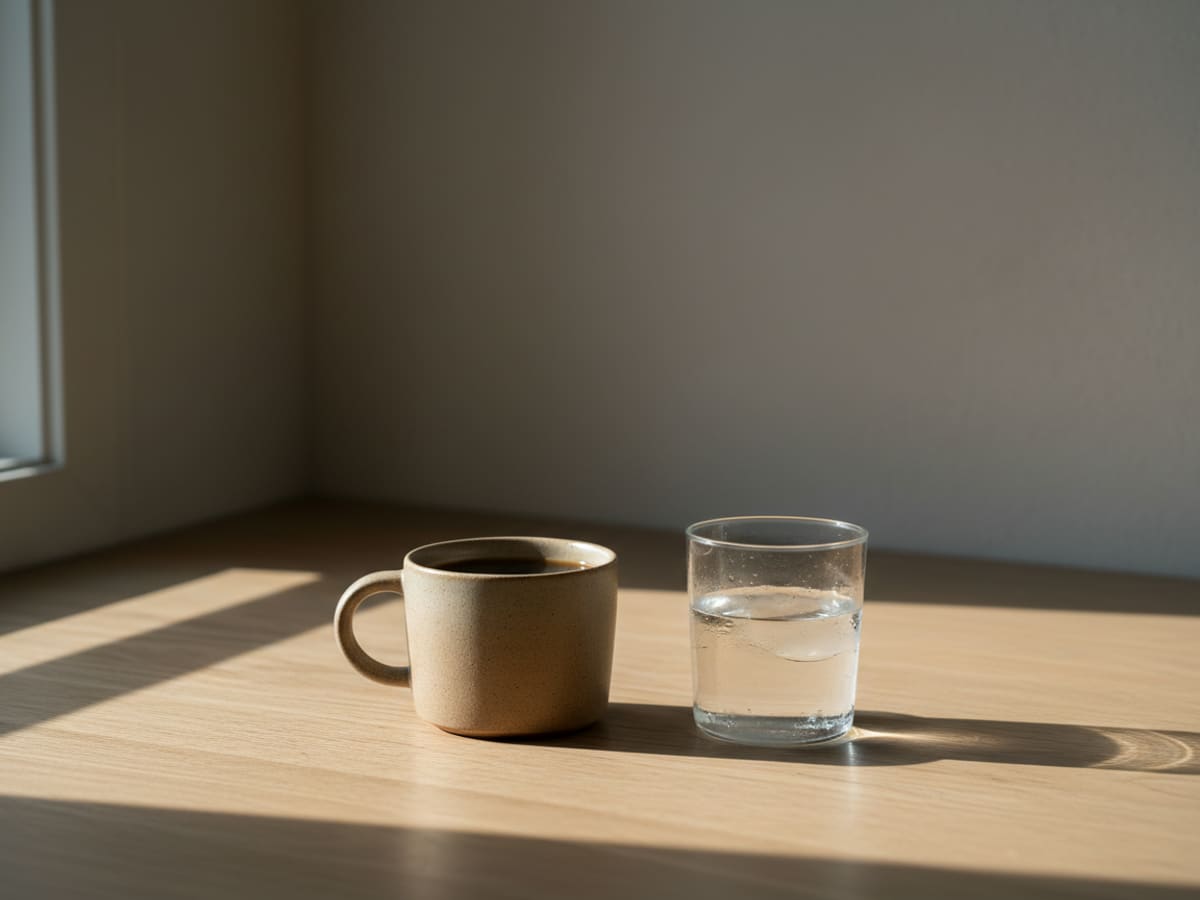
The short answer
Yes, the coffee and tea you drink count toward your daily fluids. They are mostly water, and your body uses that water the same way it uses water from a glass at the sink.
You may have heard that coffee dehydrates you. That idea sticks around because caffeine can make you urinate a bit more, especially if you are not used to it. But for most people who drink coffee or tea regularly, that effect is small, and the water in the cup more than makes up for it. Your body adapts to your usual habits, so a daily cup or two of coffee or tea is generally a fine contributor to your total.
That said, plain water is still the simplest choice, and it comes with nothing extra: no caffeine, no added sugar, no added calories. Think of coffee and tea as part of the picture rather than the whole picture.
How different drinks fit into your day
Fluids come from more places than most of us realize. Here is a general look at how common choices fit in.
- Plain water: The baseline. It counts fully and has no extras to think about.
- Coffee and tea: They count. Keep an eye on what goes in them, such as sweeteners, syrups, and cream, since those can add up quickly.
- Sparkling water: It counts just like still water. Choose whichever you enjoy more.
- Milk and milk alternatives: They count, and they bring some nutrients along with the fluid.
- Juice and sweetened drinks: They count as fluid, but they often come with a lot of sugar, so many people save them for occasional use.
- Soups, fruits, and vegetables: Foods like soup, melon, oranges, cucumbers, and lettuce contribute water too. Part of your daily fluid comes from what you eat.
- Alcohol: It is not a good way to hydrate. Alcohol can increase urine output, so it should not be counted toward your daily fluids.
You may also have seen a single number, like eight glasses a day, treated as a rule. It is really more of a rough guide. How much you need depends on your body size, activity level, the weather, your health, and whether you are pregnant or breastfeeding. A more useful approach is to pay attention to your own body and habits.
Caffeine is worth a thought on its own. Some people feel jittery, have trouble sleeping, or notice a racing heart when they have too much. If that sounds familiar, cutting back or switching to decaf or herbal tea in the afternoon may feel better, regardless of what it does for hydration.
Signs your routine might need a second look
Your body gives you clues when it could use more fluid. None of these prove anything on their own, but they are worth noticing.
- Dark yellow urine, or urinating much less often than usual
- Thirst that seems constant
- A dry mouth or chapped lips
- Headaches that show up when you have not had much to drink
- Feeling tired or lightheaded, especially in hot weather or after exercise
- Constipation that is new for you
A pale yellow color is generally a good sign that you are drinking enough. Keep in mind that some foods, vitamins, and medications can change the color of urine, so color is a hint, not a test.
It can also help to look at your pattern. If your day runs on three cups of coffee and very little else, you might be getting fewer total fluids than you think. If most of your drinks are sweetened, it may be worth balancing them with more water.
Easy ways to drink more through the day
You do not need a complicated plan. Small habits tend to work better than big resolutions.
- Start the morning with a glass of water before your first cup of coffee or tea.
- Keep a reusable bottle or glass where you can see it, at your desk, in the car, or on the kitchen counter.
- Pair water with things you already do, such as a glass with each meal and another when you take a break.
- Add flavor naturally with a slice of lemon, cucumber, or a few berries if plain water feels boring.
- Eat water-rich foods like fruit, salads, and soups.
- Drink a little extra when it is hot, when you are active, or when you are ill and your doctor says fluids are fine for you.
When to ask your doctor
For most healthy adults, listening to thirst and paying attention to urine color is enough. But some situations call for personal advice, because the right amount of fluid can vary a great deal from one person to the next.
Talk with a doctor if you have a health condition that affects fluids, such as kidney, heart, or liver problems, or if you take medications that change how your body handles water. Pregnancy, breastfeeding, and older age can also change what you need. The same goes for ongoing intense exercise or work in hot conditions.
It is also worth a conversation if you feel extremely thirsty all the time, urinate far more than usual, or notice symptoms that do not improve when you drink more.