Are Frozen Vegetables Really Second Best?
Frozen vegetables have an undeserved reputation. Here's what to know about using them well and why they can be a practical staple.
The short answer
No, frozen vegetables aren't second best. For most people, most of the time, they're a perfectly good way to eat more vegetables, and sometimes they're the smarter choice.
Fresh and frozen vegetables are more alike than the produce aisle suggests. Fresh has its charms: crisp texture, bright flavor, the pleasure of picking out a ripe tomato. But frozen vegetables give you real nutrition, less waste, and far less stress on a weeknight. The best vegetable is usually the one you'll actually eat.
How freezing works and why it matters
Vegetables meant for the freezer are typically picked at their peak, then processed soon after harvest. Many are briefly heated (a step called blanching) and then frozen quickly. Freezing essentially pauses the clock.
Fresh vegetables, by contrast, keep changing after they're picked. They may travel a long way, sit in a warehouse or on a store shelf, and then wait in your refrigerator for several more days. Over that time, some of their nutrients gradually decline, and their texture and flavor can fade too.
That's why a bag of frozen peas can compare well with "fresh" peas that have been sitting around for a while. It depends on how fresh the fresh ones really are.
There are a few honest trade-offs:
- Blanching can slightly reduce some water-soluble vitamins, though freezing then holds on to what's left.
- Texture changes. Freezing makes water inside the vegetable expand, so some vegetables turn softer when cooked. Leafy greens and broccoli hold up well in cooked dishes, while frozen vegetables you'd normally eat raw, like cucumbers or lettuce, don't work at all.
- Cooking method matters. Boiling in lots of water can wash nutrients away, whether the vegetable is fresh or frozen. Steaming, roasting, or a quick sauté tends to keep more of the goodness in.
If you're picking between frozen vegetables and no vegetables at all, frozen wins easily.
Plain frozen versus ones with sauces
This is where it pays to read the package. Plain frozen vegetables usually contain just the vegetable, and that's the version most people want as a staple.
Frozen vegetables with sauces, seasonings, or butter blends are a different thing. They can be tasty and convenient, but they may bring along extra salt, fat, or sugar. That isn't automatically a problem, but it's good to know what you're getting.
Here's a quick way to check:
- Look at the ingredient list. A short one, with the vegetable as the only item, is the plainest option.
- Scan the nutrition panel for sodium and added sugars, especially if you're watching either one.
- Compare similar bags side by side. Two bags of the same vegetable can differ quite a bit.
Easy ways to use them on busy nights
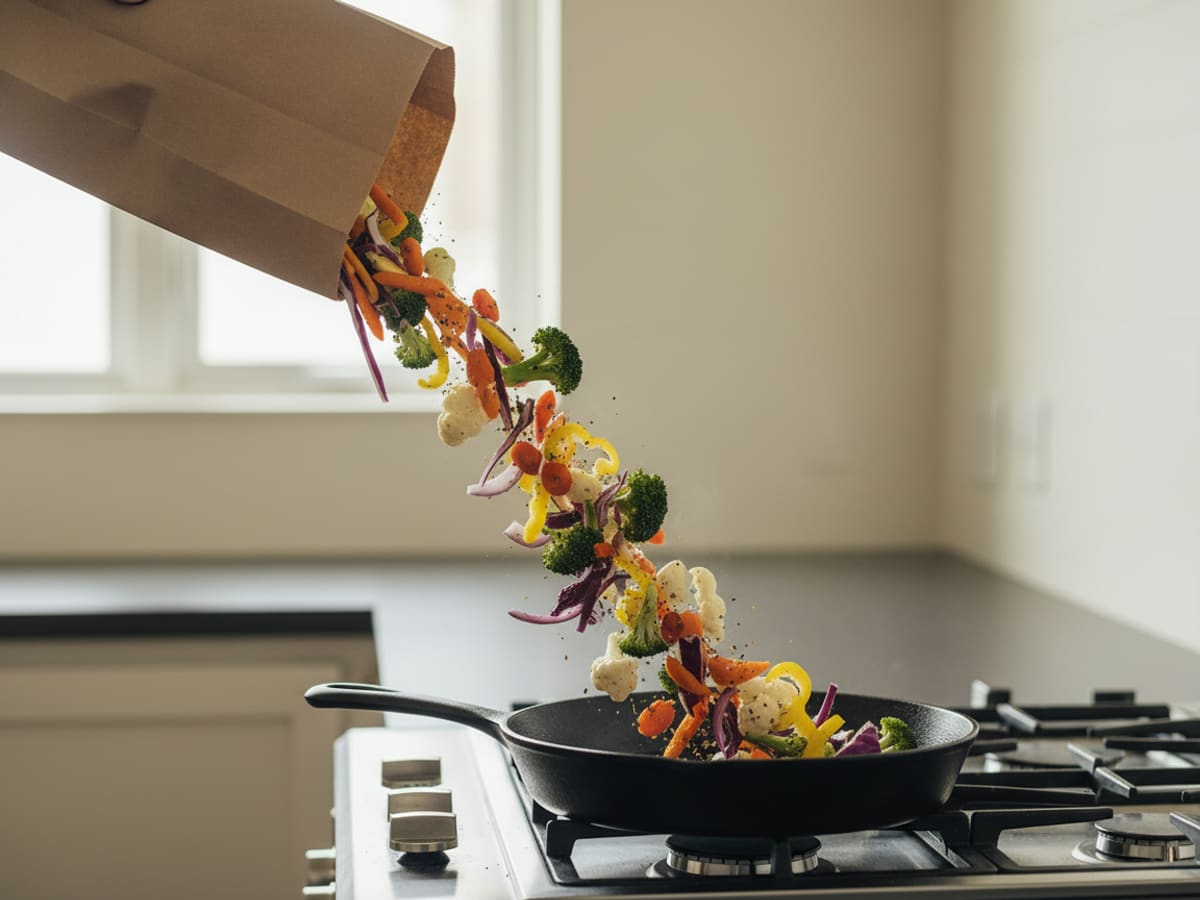
Frozen vegetables are already washed, trimmed, and chopped, which makes them one of the easiest shortcuts in the kitchen. Most can go straight from freezer to pan without thawing.
Here are some simple ideas:
- Stir them into soups, stews, or chili during the last several minutes of cooking.
- Toss them into scrambled eggs, omelets, or a breakfast hash.
- Add them to pasta or rice dishes for color and bulk.
- Blend leafy greens like spinach into smoothies.
- Warm them as a quick side next to whatever protein you're cooking.
If you want a basic method that works for many vegetables, try this one:
- Heat a little oil in a wide pan over medium-high heat.
- Add the frozen vegetables straight from the bag, without thawing.
- Cook, stirring now and then, until hot through and lightly browned in spots.
- Season with salt, pepper, herbs, or a squeeze of citrus right before serving.
Spreading them out in a single layer helps them brown rather than turn soggy. If the pan is crowded, cook them in two batches.
Storing them so they stay good
Frozen vegetables keep well, but they're not immortal. A little care keeps them tasting their best.
- Keep your freezer cold and steady. Opening the door often or letting the freezer warm up and cool down again can lead to ice crystals and dried-out food.
- Seal the bag tightly after each use. Squeeze out extra air and use a clip or a zip-style freezer bag.
- Don't refreeze vegetables that have fully thawed and sat out for a while. If a bag has partly melted and refrozen into one solid block, the quality may have suffered, and it's worth being cautious.
- Watch for heavy frost or ice crystals inside the bag. A little is normal. A lot can mean the vegetables were thawed and refrozen or stored too long, and they may taste dull or dry.
- Check the date on the package and use older bags first.
If something smells off or looks clearly spoiled once cooked, it's best to throw it out.
So the next time you walk past the freezer aisle, feel free to stop. Frozen vegetables are a practical, honest way to get more plants on your plate